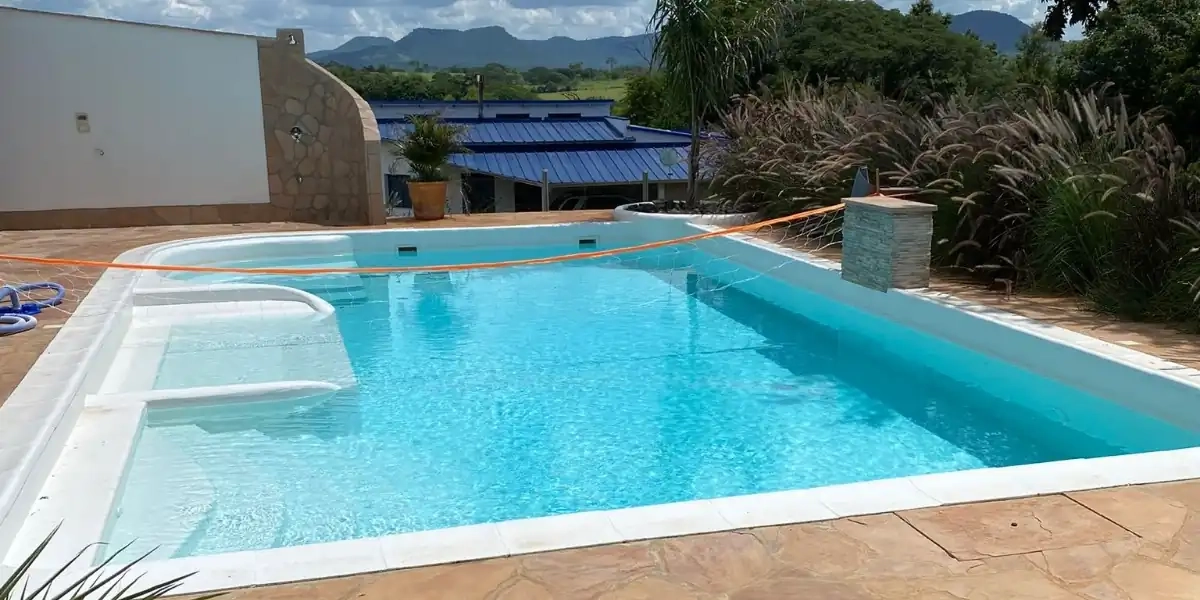
It gets hot in Paraguay, and if you're building, you can't avoid the pool topic. Before you jump in the water, you need to make a decision: Classic chlorine or salt electrolysis?
Here are the facts without half-truths, so your pool project doesn't turn into a never-ending construction site.
1. Classic Chlorine: The Manual Method
Here, you're the chemist yourself. You dose chlorine manually as tablets or granules.
Fact is: It works immediately. But: You have to track the pH value like a shadow. If the pH value isn't right, the chlorine is ineffective, but still burns your eyes.
Honest opinion: Cheap to purchase, but time-intensive. Anyone who neglects the chemistry will have green water within 24 hours.
2. The Chlorine Generator (Salt Electrolysis)
A saltwater pool is not chlorine-free. The chlorine generator simply produces the chlorine on-site from salt that we add to the water.
The process: The electrolysis cell splits the salt (NaCl). Fresh chlorine is created.
The comfort: The salt concentration is minimal (approx. 0.4%). That's about as much as in a tear – you can barely taste it, but the skin feels extremely soft.
IMPORTANT TECHNICAL NOTE: Anyone who has a chlorine generator must never add regular chlorine on their own initiative! This can immediately destroy the generator's cell. The system is self-sufficient – anyone who mixes in foreign chemicals will pay for it in the end.
Why This Matters to Us
Whether home construction or pool technology: A system is only as good as its planning. Anyone who builds cheap components into a saltwater system risks corrosion damage. Anyone who chlorinates manually but has no time for maintenance loses water quality.
At Avantgarde, we build for longevity. A pool should bring relaxation, not additional work. That's why we rely on technology that's solid and reliable.