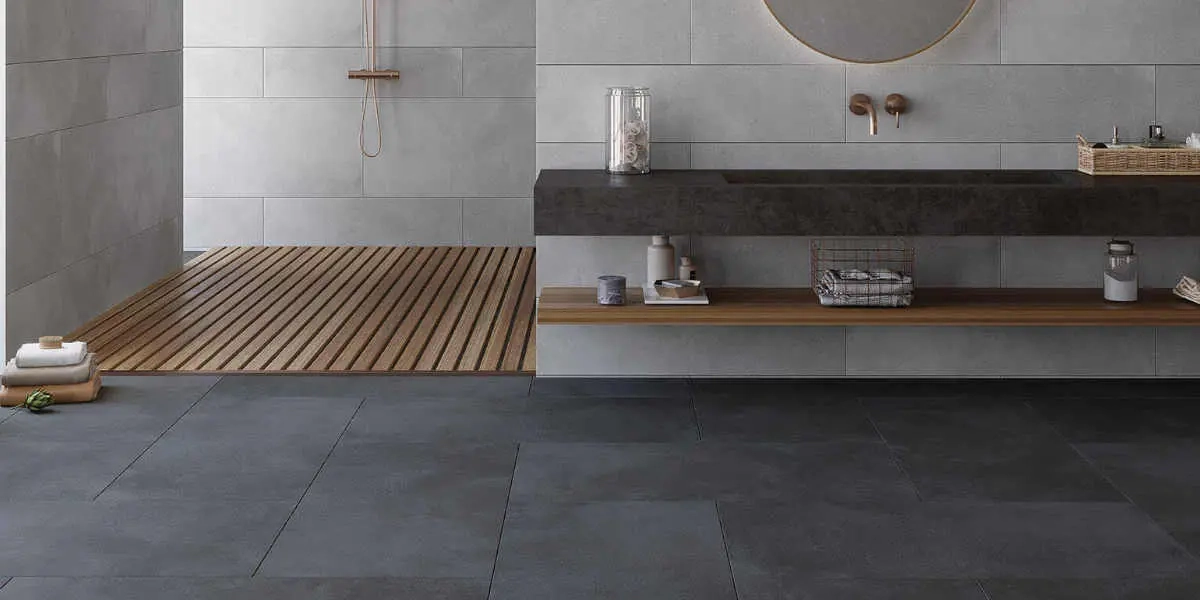
We currently have a number on the table that makes us dizzy: tons upon tons of tiles we need to order for La Perla! That's... well, a lot of flooring.
With these quantities, of course, the question quickly arises: what exactly is going under your feet? And why do we constantly talk about Cerámicas and Porcelanatos? Most people actually don't know the distinction – yet it's elementary for the longevity of your home. Because it's currently relevant for us and we want to shed light on the tile darkness, today our small but important construction course for you.
1. Porcelanato: The Marathon Runner in a Fine Suit
Think of Porcelanato1 as the top athlete among tiles.
The Difference (Professional Check): Porcelanato is made from finer, denser clay and fired at significantly higher temperatures (up to 1250°C). The result? It's extremely compact and has a water absorption of less than 0.5 percent. It's virtually waterproof.
What That's Good For: It's extremely abrasion-resistant and hardly absorbs stains. In Paraguay, where it gets hot and humid, Porcelanato is the flooring that still looks like new even after years of heavy use (kitchens, terraces, dining rooms). It's the bodyguard that protects your floor.
Conclusion: Where things get tough or should look elegant, we choose Porcelanato.
2. Cerámicas: The Charming Artist with Delicate Skin
Classic Cerámica2 is like a dear but sensitive friend. It has its charm but isn't suitable for every party.
The Difference (Professional Check): Cerámicas are fired at lower temperatures and are more porous (water absorption often over 3 percent). The color and design are almost always on the upper glaze layer (Esmalte).
Caution: When the glaze is damaged, the porous base underneath is exposed. We often advise against it for heavily frequented floors in living areas.
Pro Tip: Look at the Back
For a quick professional look, you can often recognize the difference just by looking at the back (the tile body): Porcelanato is colored and dense throughout, while Cerámica usually shows a significantly more porous, red clay body.
Why This Choice Is Crucial in Paraguay
The choice between the two is more than just a matter of taste here. Due to the high humidity and heat in Paraguay, your floors and walls need material that can withstand the elements.
When we at Avantgarde equip the floor of a main living space with Porcelanato, we guarantee you a solution that:
- Is durable (no quick wear)
- Is moisture-resistant (no unsightly stains from inside)
- Is value-stable (your property still looks high-quality in ten years)
In short: Cerámica is charming and has its place; but Porcelanato is the one that does the hard work and secures your investment long-term.
Porcelain tile (Porcelanato) is a type of ceramic tile that is fired at higher temperatures (1200-1400°C) and has a water absorption rate of less than 0.5%. According to industry standards (ASTM C373, ISO 13006), this low porosity makes it highly resistant to staining, frost, and wear. It's classified as impervious tile and suitable for high-traffic areas and outdoor use. ↩
Ceramic tile (Cerámica) is fired at lower temperatures (1000-1200°C) and typically has a water absorption rate above 3%, making it more porous than porcelain. The surface glaze provides color and protection, but if damaged, the porous clay body underneath is exposed to moisture penetration and staining. Best suited for walls and low-traffic areas. ↩