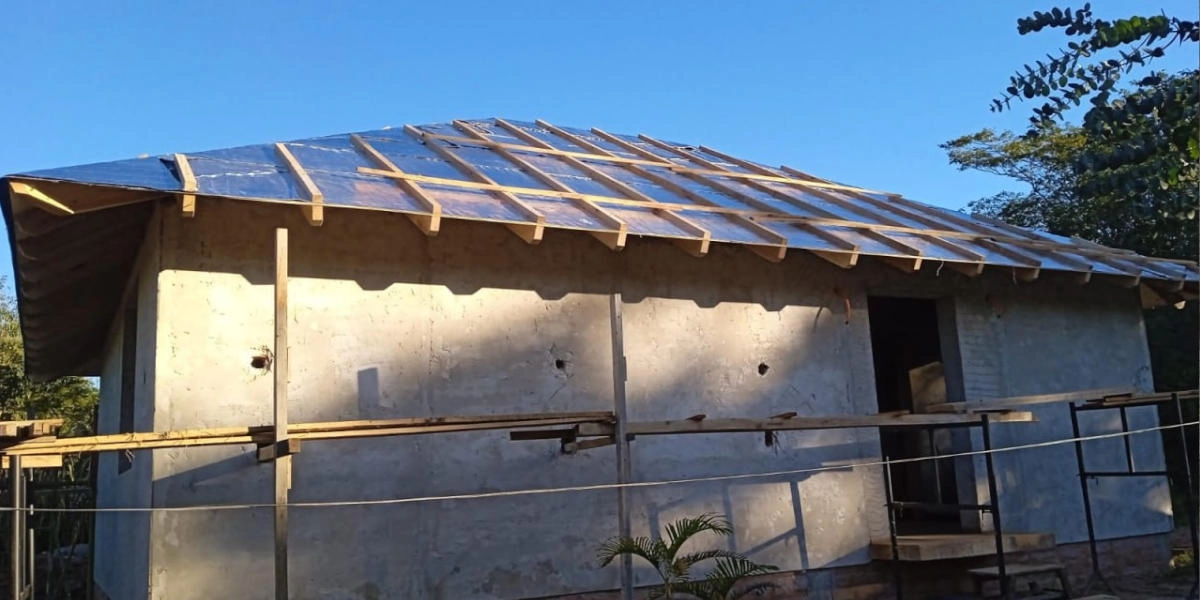
Many builders in Paraguay are lured by supposedly cheap offers. At first glance, the prices seem low – but often there's a very simple construction method behind it that can't keep up with European standards of comfort and quality. For example, walls are often very thin, roofs not insulated, and installations kept simple. For builders from Europe, this can later lead to retrofitting that is significantly more expensive than solid construction quality from the start.
In addition, many offers lack important services, such as foundation reinforcements, waterproofing, or even siphon connections.1 These items are then often billed separately later. On top of that, there are hardly any binding building codes2 or legal quality standards in Paraguay. Therefore, the most detailed possible description of services in the construction contract is particularly important to be protected in case of doubt.
Cheap construction offers can therefore never guarantee good quality. On the other hand, it's also not true that: the more expensive the offer, the better the quality. That's why it's important to know what to look for when building a house – such as transparent contracts, clear service descriptions, the qualifications of the construction company, and the materials used.
Many think: "I can improve it later." But retrofitting is usually more complex and expensive than good construction from the start. Others say: "I just want to build cheaply." But poor construction quality can negatively affect living comfort, energy consumption, and safety – and thus also the value retention of the house.
It's also important to know that "local standard" in Paraguay doesn't automatically mean "good," especially if you're used to European standards. Quality doesn't just depend on the material, but also on planning, workmanship, and construction supervision. Therefore, it's advisable to make clear agreements and pay attention to transparent communication.
This way you avoid nasty surprises and build better in the long term.
A siphon (or trap) is a plumbing device that retains a small amount of water to prevent sewer gases from entering buildings. Proper installation is essential for sanitation and indoor air quality. In regions without strict building codes, these critical components are sometimes omitted to reduce costs. ↩
Building codes are sets of regulations that specify minimum standards for constructed objects such as buildings and structures. Paraguay has limited national building code enforcement compared to European countries, which follow strict standards like Eurocode. This regulatory gap can lead to significant quality variations in construction projects. ↩